
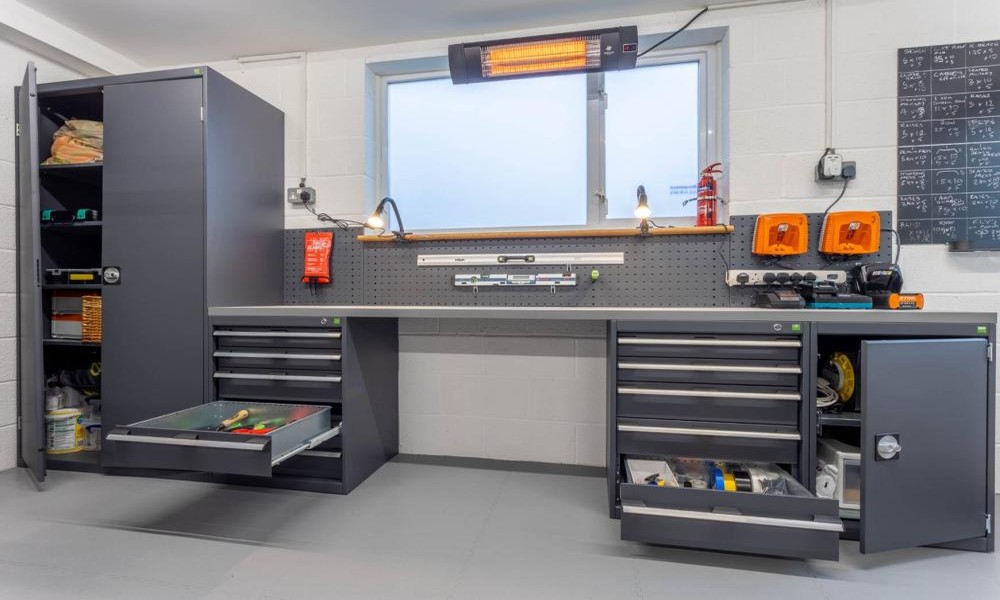

The people in the workshop should be helped every day by a workshop. Even a large area can be hard to handle if it is not properly planned. Tools get lost, workstations become cluttered, and employees lose time traveling to and from the job.
That’s why the fit-out and installation of a workshop is so vital to any workshop project. By having a well-planned setup, businesses can also enhance their workflow and boost safety and order for employees.
Each workshop is unique in its approach. There are businesses that require heavy duty storage for the machines and tools, and some others necessitate open work areas for assembly or repair. Before installing, it’s important to plan correctly otherwise, costly changes will be necessary later.
The aim is to develop a workshop which appears to be useful to staff from the start. Effective planning can pay off for businesses in the long term, both in terms of time and cost.
It is important to know what the workshop will be used for.
The biggest error that companies make is when they are designing a workshop without considering everyday tasks. A workshop should be what you do, not how you do it as it appears on paper.
It is important to think about the movement of materials around the space when planning fitout and installation during workshops. Ease of access to tools, equipment and stock throughout the day. Productivity can very rapidly slow, if important items are not within easy reach or are too far away.
Also, size of the machinery and equipment plays a role in the planning. All work area should be provided enough space for safe movements without compromising the efficiency and easy to manage workshop.
It’s also a good idea to think ahead when planning for future expansion of your business. Eventually, many workshops will require extra storage and/or additional workstations. Having an adaptable plan might make future changes significantly less complicated that do not have to be thoroughly redesigned.
Safety and workflow are improved with good layouts.
A tidy and well-organized workshop is not just neat and tidy, it is also professional! Provides workers with a safer and less stressful way to complete tasks. Often things are crowded and poorly laid out, which cause accidents, damage equipment or time is wasted.
Safety and space flow are key issues in workshop fitouts and installation planning. Walkways should be kept clear, storage systems should be stable and work stations provide staff members with easy mobility to perform their tasks.
Lights, ventilation, are another aspect of the workshop design. Comfortable and easy working space is conducive for better worker performance during long working periods.
Minor changes in the layout can smooth out tasks and operations in everyday life. With tools and materials correctly set up teams spend less time looking for tools, and more time applying them to their work.
Quality Installation Supports Long Term Performance
The planning process only comes second. The quality of the installation is also a significant factor in the workshop’s service life. Reliable work space is created by strong shelving, secure benches and proper system setups.Strong shelving, secure benches, and proper system setups create a reliable work space for daily use.
A seasoned installer will know how to install safely and efficiently to minimise disruption to the business. This is particularly relevant in workshops which must remain in operation during upgrades or renovations.
When done correctly, good installation work will also prevent businesses from dealing with future repairs and maintenance issues. Heavy use may result in long lasting use of durable materials and fitting methods.
Workshop fit-outs that are properly planned and executed are likely to have a long lifespan of success, with the business being more organised and the process smoother for years to come.
Practical Workshops Facilitate the Growth of Businesses
A workshop should be supportive of present needs and developmental needs. As businesses evolve, so must worksites. The flexibility of the layouts and clever storage solutions make it easier to deal with new kit, more employees or shifts in workload later on.
Simplicity, organisation and ease of maintenance are the best workshop setups. Workers will be able to concentrate on doing their jobs right rather than getting caught up in unnecessary obstacles or poor layouts.
By employing proper planning and installation methods, companies can develop workshop areas that will continue to operate efficiently, securely, and productively for years to come.
Better Workshop Designs Start With Proper Planning
